
+86 138-8985-0231/+86 138-9812-5732

AEO-9 is a fatty alcohol polyoxyethylene ether widely used as a nonionic surfactant in detergent, textile-processing, industrial-cleaning and emulsification formulations. It combines a lipophilic fatty alcohol group with a hydrophilic polyoxyethylene chain, enabling it to interact with both oily materials and water.
This molecular structure gives AEO-9 several useful functions, including detergency, emulsification, wetting and dispersion. However, its performance depends on the fatty alcohol feedstock, average ethylene oxide number, formulation composition, temperature and application conditions.
Understanding these factors helps formulators distinguish AEO-9 from lower-EO alcohol ethoxylates and select an appropriate grade for the intended system.
AEO is an abbreviation commonly used for fatty alcohol polyoxyethylene ether, also known as alcohol ethoxylate. These products are generally prepared through the addition of ethylene oxide to fatty alcohol.
Their general chemical structure can be represented as:
R–O–(CH₂CH₂O)ₙ–H
In this structure:
R represents the hydrocarbon chain of the fatty alcohol.
The polyoxyethylene chain provides hydrophilic properties.
The value of “n” represents the average number of ethylene oxide units.
For AEO-9, the average ethylene oxide addition number is approximately nine. This gives AEO-9 greater water affinity than lower-EO grades such as AEO-3.
AEO-9 is a nonionic surfactant. It does not carry a permanent positive or negative ionic charge in an aqueous solution. This characteristic generally provides useful compatibility with anionic, nonionic and selected cationic formulation components.
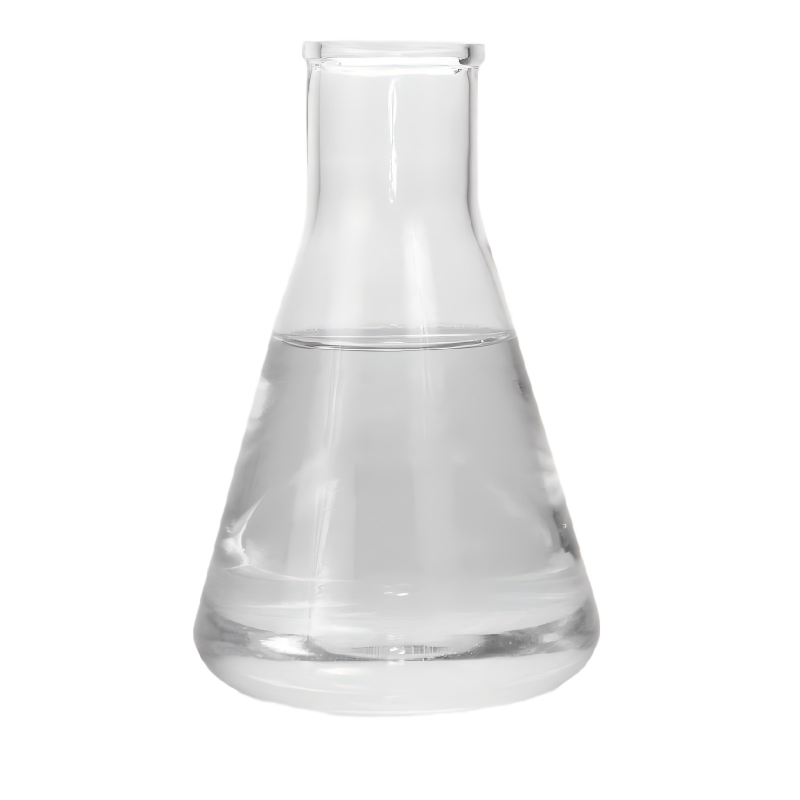
Commercial specifications may vary according to the fatty alcohol carbon-chain distribution, manufacturing process and testing method. Typical reference properties include:
| Property | Typical Description |
|---|---|
| Product type | Nonionic surfactant |
| Average EO number | Approximately 9 |
| Appearance at 25°C | White to milky-white paste or soft solid |
| Active matter | Commonly ≥99% |
| HLB value | Approximately 12.5–13.5 |
| pH value | Commonly 5.0–7.0 |
| Hydroxyl value | Approximately 86–94 mg KOH/g |
| Cloud point | Approximately 75–88°C |
| Water compatibility | Dispersible or soluble under suitable temperature and mixing conditions |
These values should be treated as typical references rather than universal specifications. Buyers should compare the batch Certificate of Analysis with the agreed product specification before use.
AEO-9 may appear as a paste, waxy material or soft solid depending on ambient temperature. It can become harder or less fluid during cold weather.
This physical change does not necessarily mean that the product has deteriorated. Gentle warming and mixing may restore suitable handling properties. Uncontrolled high-temperature heating should be avoided.
A surfactant molecule contains both hydrophilic and lipophilic portions. The lipophilic portion interacts with oils and greasy materials, while the hydrophilic portion interacts with water.
When AEO-9 is added to a suitable aqueous formulation, it can help reduce interfacial tension between water and oily substances. This supports several functions.
AEO-9 can help disperse an oil phase into an aqueous phase. Because of its relatively high HLB value, it is generally more suitable for oil-in-water emulsification than low-EO alcohol ethoxylates.
The stability of an emulsion does not depend on AEO-9 alone. The required HLB of the oil phase, surfactant blend, temperature, electrolyte concentration and mixing conditions must also be considered.
AEO-9 can assist in loosening, emulsifying and dispersing oils and greasy soil. These properties make it useful in household, institutional and industrial cleaning formulations.
By reducing surface tension, AEO-9 can improve contact between an aqueous formulation and the surface being processed. This is useful when a cleaning or processing solution must spread across metal, textile or other substrates.
AEO-9 can help keep oily substances and some particulate soil distributed in an aqueous system, reducing their redeposition during cleaning or processing.
AEO-9 can be used as a functional raw material in:
Laundry detergents
Dishwashing formulations
Hard-surface cleaners
Multipurpose cleaners
Commercial cleaning products
Oil and grease removers
It is often used with other surfactants, builders, solvents, chelating agents and performance additives. The final formulation should be evaluated for detergency, foam, viscosity and storage stability.
AEO-9 should not automatically be considered suitable for every personal-care or household formulation. Local regulations, impurity requirements and the intended exposure conditions must be reviewed before selection.
Industrial equipment and metal parts may carry lubricating oil, machining residue, grease and other surface contaminants. AEO-9 can contribute to wetting, detergency and oil emulsification in industrial-cleaning formulations.
Possible applications include:
Machinery cleaning
Metal surface degreasing
Workshop cleaning
Equipment maintenance
Industrial hard-surface cleaning
Pre-treatment cleaning processes
Formulators should test compatibility with alkaline builders, solvents, corrosion inhibitors and the metal substrate. Cleaning efficiency should be evaluated under the intended temperature, water hardness and processing time.
In textile formulations, AEO-9 may be used as a component of:
Scouring agents
Washing agents
Wetting agents
Degreasing agents
Emulsifying systems
Dyeing and finishing auxiliaries
Its role is determined by the fiber type and processing conditions. Cotton, wool and synthetic fibers may require different surfactant combinations.
Water hardness, bath temperature, electrolyte content and interaction with dyes or other auxiliaries should be evaluated before full-scale production.
AEO-9 may be evaluated in leather-processing auxiliaries for wetting, emulsification and degreasing. Its suitability depends on the hide type, processing stage and other chemicals present in the formulation.
Laboratory and production trials are recommended because excessive degreasing or unsuitable emulsification can affect subsequent leather-processing operations.
The HLB value of AEO-9 makes it a possible emulsifier for selected oil-in-water systems containing:
Mineral oils
Fatty substances
Selected hydrocarbon solvents
Silicone oils
Lubricating components
Industrial processing oils
A stable emulsion often requires a blend of emulsifiers rather than one surfactant. AEO-9 may therefore be combined with lower- or higher-HLB surfactants to match the required HLB of the oil phase.
Depending on technical testing and regulatory requirements, AEO-9 may also be evaluated in:
Papermaking auxiliaries
Pesticide formulation auxiliaries
Metalworking fluids
Coating-processing auxiliaries
Pigment and dispersion systems
Water-based industrial process formulations
AEO-9 is an industrial raw material, not a ready-to-use finished product. Its dosage, compatibility and safety must be evaluated in the final formulation.
AEO-3 and AEO-9 are both fatty alcohol ethoxylates, but they are not interchangeable.
| Comparison | AEO-3 | AEO-9 |
|---|---|---|
| Average EO number | Approximately 3 | Approximately 9 |
| Relative water affinity | Lower | Higher |
| Relative oil affinity | Higher | Lower than AEO-3 |
| HLB level | Lower | Higher |
| Typical appearance | Clear to light-yellow liquid | White paste or soft solid |
| Typical emulsion preference | Selected water-in-oil systems | Selected oil-in-water systems |
| Common formulation role | Lipophilic emulsifier or co-emulsifier | Detergency, wetting and hydrophilic emulsification |
AEO-3 is more lipophilic and is often used where affinity for the oil phase is required. AEO-9 is more hydrophilic and is commonly selected for aqueous cleaning and oil-in-water emulsification.
In some formulations, AEO-3 and AEO-9 may be blended to obtain an intermediate HLB value. The appropriate ratio should be determined according to the oil phase and required emulsion stability.
The name “AEO-9” alone is not sufficient to define every product characteristic. Buyers and formulators should consider the following factors.
The fatty alcohol feedstock influences solubility, appearance, detergency and emulsification. Products based on different carbon-chain ranges may perform differently even when their average EO number is similar.
High-active grades reduce the amount of water or other diluents introduced into a formulation. The active matter should be confirmed by the product specification and COA.
HLB is an important reference for emulsifier selection. AEO-9 commonly has a medium-to-high HLB value, but the optimum surfactant system should be matched to the required HLB of the oil phase.
Cloud point helps formulators understand the temperature-dependent behavior of a nonionic surfactant solution. However, results cannot be compared correctly unless the test concentration and medium are specified.
A cloud point measured in water may differ from one measured in sodium chloride solution. Buyers should therefore request both the value and the testing method.
Hydroxyl value may be used as a quality-control reference related to the average ethoxylation level. It should be assessed together with other parameters rather than used as the sole basis for product selection.
Because AEO-9 may become solid or highly viscous at low temperatures, storage conditions and production equipment should be considered. A heated room, warming jacket or suitable melting procedure may be needed during cold seasons.
There is no universal dosage for AEO-9. Its appropriate concentration depends on:
Intended application
Type and quantity of oil or soil
Other surfactants in the formulation
Water hardness
Operating temperature
Required foam level
Cleaning or emulsification target
Regulatory restrictions
A preliminary formulation range of approximately 0.5%–10.0% may be considered for laboratory evaluation, but this is not a guaranteed dosage recommendation.
Trials should evaluate:
Cleaning performance
Wetting speed
Emulsion stability
Foam profile
Viscosity
Low-temperature stability
High-temperature stability
Compatibility with electrolytes
Compatibility with the substrate
Storage stability
AEO-9 should be stored in sealed packaging in a cool, dry and ventilated place. It should be protected from moisture, direct sunlight and uncontrolled heat.
When the product becomes less fluid at low temperatures, gentle warming may be used before transfer or formulation. The material should be mixed uniformly after warming.
Operators should wear suitable protective gloves and eye protection. Detailed safety, first-aid, transport and accidental-release information should be obtained from the current Safety Data Sheet.
Before placing an order, buyers should confirm:
Fatty alcohol carbon-chain range
Active matter
Appearance at the specified temperature
HLB value
Hydroxyl value
Cloud point and test method
pH and test concentration
Applicable CAS number
Packaging and net weight
Batch COA and current SDS
Storage requirements
Intended industrial application
The CAS number deserves particular attention. Alcohol ethoxylates made from different fatty alcohol feedstocks may use different CAS numbers. The applicable number should be taken from the manufacturer’s SDS rather than assigned only according to the commercial name “AEO-9.”
AEO-9 is a nonionic fatty alcohol ethoxylate that provides detergency, emulsification, wetting and dispersion in a range of aqueous industrial formulations. Its relatively high water affinity and medium-to-high HLB value distinguish it from lower-EO grades such as AEO-3.
Selecting a suitable AEO-9 requires more than checking the product name. Fatty alcohol distribution, active matter, HLB, hydroxyl value, cloud point, appearance and application conditions should all be reviewed.
Because surfactant performance depends on the complete formulation, laboratory testing remains necessary before commercial use. A batch-specific COA, product specification and SDS should be obtained to confirm quality, safety and handling requirements.
Contact Us
Email:sales01@xzhch.com
Phone:+86 138-8985-0231/+86 138-9812-5732
WeChat:+86 138-8985-0231/+86 138-9812-5732
Whatsapp:+86 138-8985-0231/+86 138-9812-5732
Address:No. 33, Naner Road, Heping District, Shenyang, Liaoning, China
Copyright © 2002-2025 Powered by EyouCms 备案号:辽ICP备12007065号-1