
+86 138-8985-0231/+86 138-9812-5732

DEIPA (Diethanolisopropanolamine) and TIPA (Triisopropanolamine) are alkanolamines used in various industrial formulations.
One application area for both materials is cement grinding aid and cement additive formulations.
When searching for raw materials for cement grinding aids, formulators often encounter questions such as:
There is no single answer that applies to every cement plant.
The performance of an alkanolamine-containing grinding aid depends not only on the chemical itself, but also on clinker composition, supplementary cementitious materials, gypsum, grinding conditions, dosage and other components in the formulation.
Understanding these variables is more useful than simply asking whether DEIPA or TIPA is "better."
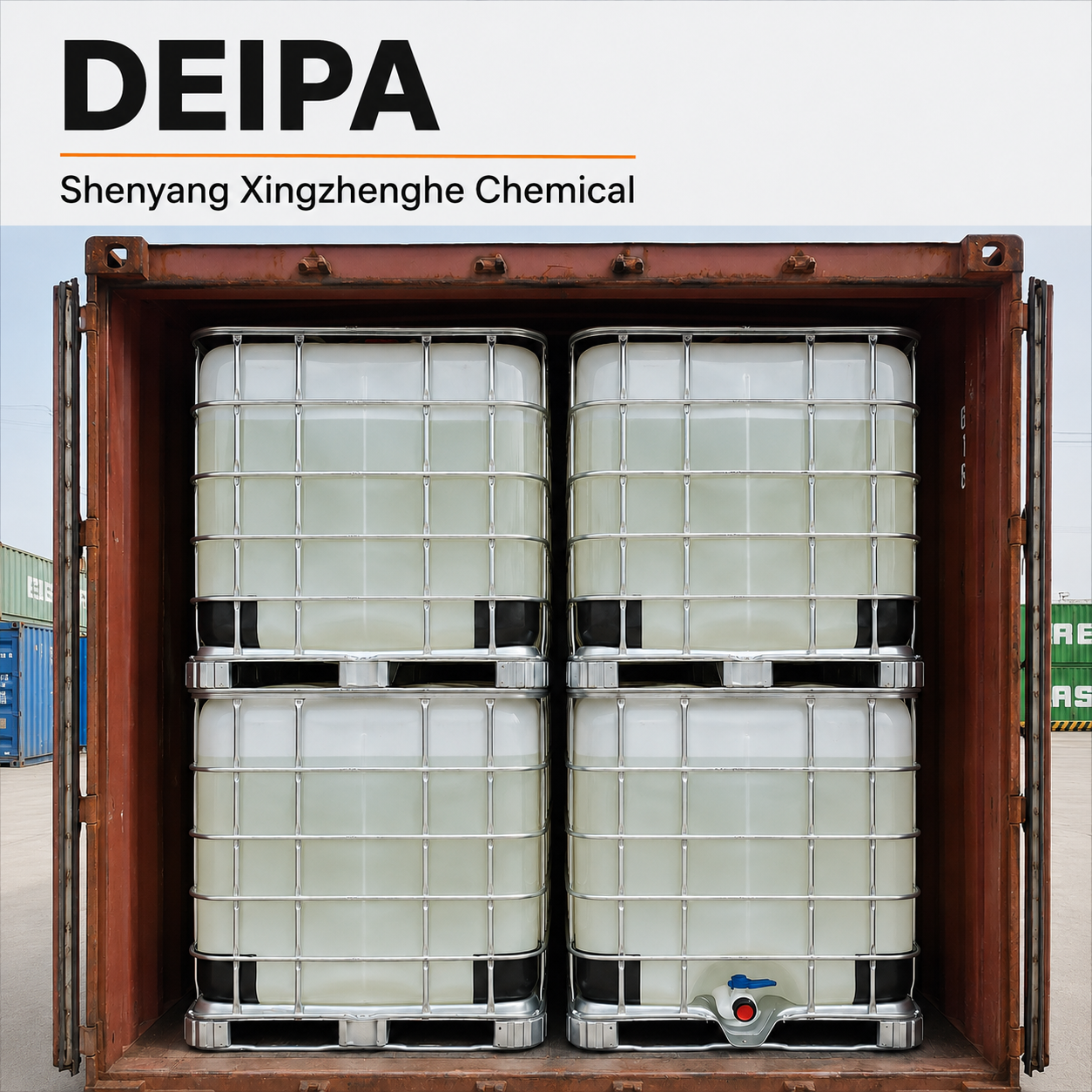
DEIPA stands for Diethanolisopropanolamine.
It is an alkanolamine containing both amine and hydroxyl functionalities.
DEIPA is used as a raw material or functional component in certain cement grinding aid and cement additive formulations.
In practical cement applications, its effect depends on the complete formulation and the characteristics of the cementitious system.
Typical areas where DEIPA may be evaluated include:
DEIPA should therefore be considered as one component of a formulation, rather than as an isolated solution for every cement-performance requirement.
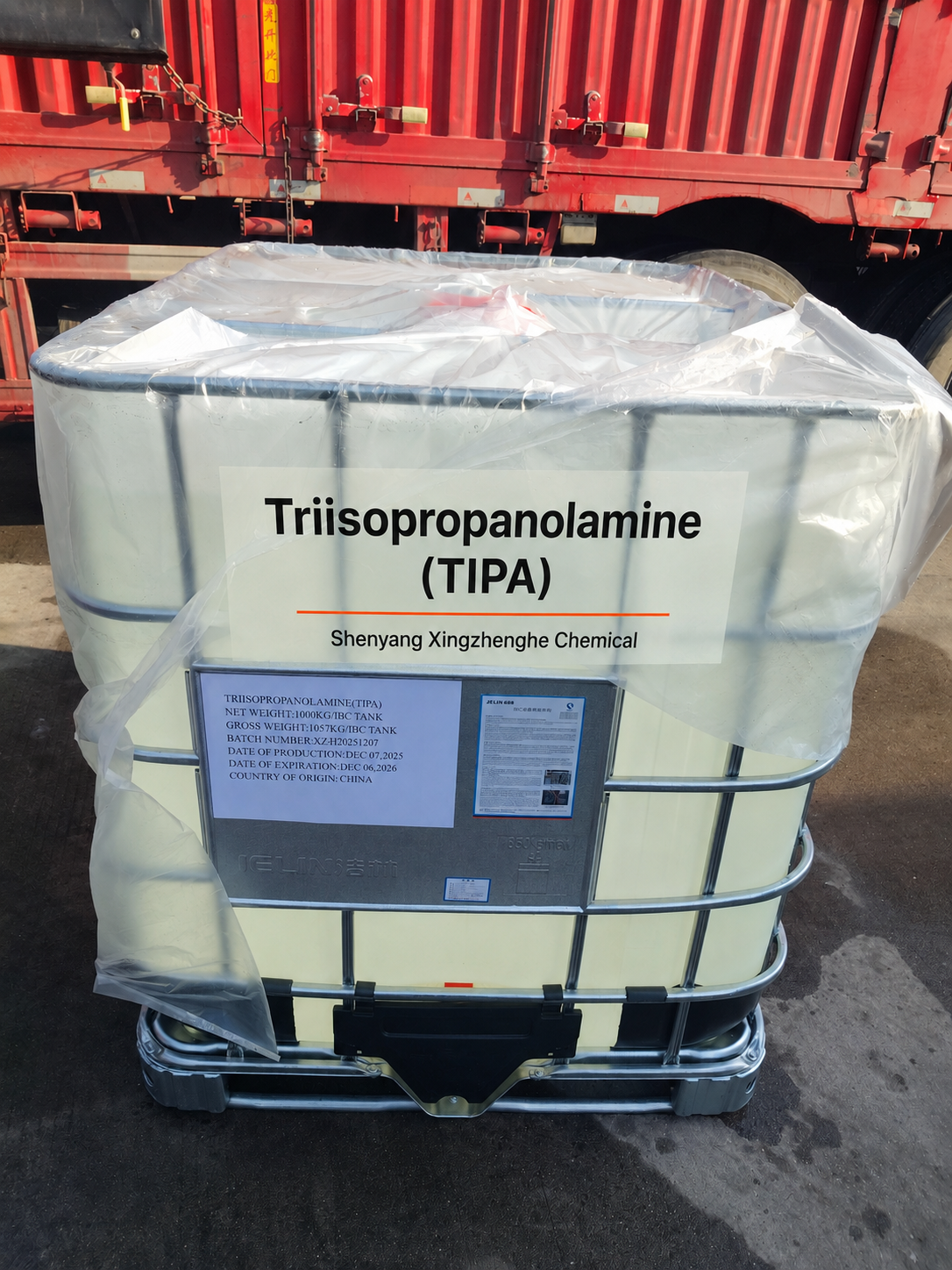
TIPA stands for Triisopropanolamine.
Like DEIPA, it belongs to the alkanolamine family and contains both amine and hydroxyl functional groups.
TIPA has been used in cement-related formulations, including certain grinding aids and performance additives.
Depending on the cement system, TIPA may interact with cement hydration processes and influence the properties of the resulting cement.
However, its actual effect is influenced by:
This means that TIPA performance should be evaluated using the actual cement or clinker for which the grinding aid is being developed.
DEIPA and TIPA are related alkanolamines, but they are different chemical compounds.
Their molecular structures are not identical, and this can result in different behavior in cement grinding aid formulations.
A simplified comparison is shown below:
| Item | DEIPA | TIPA |
|---|---|---|
| Full Name | Diethanolisopropanolamine | Triisopropanolamine |
| Chemical Family | Alkanolamine | Alkanolamine |
| Functional Groups | Amine + hydroxyl groups | Amine + hydroxyl groups |
| Cement Application | Grinding aid / cement additive formulations | Grinding aid / cement additive formulations |
| Can Be Used Alone? | Depends on formulation | Depends on formulation |
| Can Be Used in Blends? | Yes, depending on formulation | Yes, depending on formulation |
| Direct 1:1 Replacement? | Should be tested | Should be tested |
| Selection Basis | Cement, clinker, dosage and target properties | Cement, clinker, dosage and target properties |
The important point is:
DEIPA and TIPA should not automatically be treated as interchangeable chemicals.
A formulation developed with TIPA should be tested again if TIPA is replaced with DEIPA, and vice versa.
To understand DEIPA and TIPA, it is useful to separate two concepts:
grinding process effects and cement hydration effects.
During cement grinding, fine particles can agglomerate because of surface forces.
Grinding-aid formulations are used to influence particle interactions and grinding behavior.
After the cement is mixed with water, some components of the formulation may also interact with the hydration process.
Alkanolamines can participate in interactions involving cement phases and dissolved ions.
Therefore, the final effect of a DEIPA- or TIPA-containing formulation may involve more than one mechanism.
This is also why evaluating only the liquid grinding aid itself is not sufficient.
The resulting cement needs to be tested.
DEIPA can be used as a component in cement grinding aid formulations.
However, commercial grinding aids are often formulations rather than a single pure chemical.
Depending on the product design, a formulation may contain combinations of:
DEIPA may therefore be one of several raw materials used to obtain the intended grinding and cement-performance characteristics.
The final formulation depends on the cement plant, clinker and required product specifications.
TIPA is also used as a component in certain cement grinding aid and cement additive formulations.
As with DEIPA, the practical result depends on the complete system.
The same TIPA dosage can behave differently when:
For this reason, TIPA should be evaluated as part of a cement-specific formulation.
It is common to find simplified statements online assigning one alkanolamine to early strength and another to later strength.
Such statements should be treated carefully.
Cement strength development is affected by many variables, including:
Therefore, it is not technically appropriate to assume that a particular DEIPA or TIPA dosage will produce the same strength response in every cement.
A more reliable method is to test:
1-day, 3-day, 7-day and 28-day strength
according to the requirements of the particular cement and market.
Portland cement clinker contains several mineral phases.
Their proportions vary according to raw materials and kiln operation.
Changes in clinker chemistry can affect:
As a result, a DEIPA-based formulation developed for one clinker source may need adjustment when applied to another clinker.
The same applies to TIPA.
This is one reason why cement grinding aid formulation development should include testing with the actual clinker or cement rather than relying only on general product data.
Cement fineness is another important variable.
Finer cement has a greater specific surface area and generally shows different hydration behavior from coarser cement.
Changes in grinding conditions may therefore influence both:
When comparing DEIPA and TIPA formulations, the resulting cement should ideally be produced or evaluated at comparable fineness.
Otherwise, a strength difference may partly result from different particle-size distributions rather than the alkanolamine alone.
Grinding aids are used during the cement grinding process, where they can influence particle interactions.
Depending on the mill and formulation, the grinding process may affect:
However, performance cannot be inferred from chemical composition alone.
Mill type and operating conditions also matter.
Relevant variables can include:
Therefore, laboratory cement testing and plant trials serve different purposes and are often both useful.
DEIPA-containing formulations can influence cement hydration and strength development under suitable conditions.
But the magnitude and age of the strength response depend on the cement system.
It is therefore more accurate to ask:
How does a particular DEIPA formulation affect this cement at 1, 3, 7 and 28 days?
rather than:
How much strength does DEIPA increase?
The first question can be answered through controlled testing.
The second cannot be given one universal answer for all cements.
TIPA can also influence cement hydration and strength development in certain formulations.
As with DEIPA, the actual response depends on cement composition and dosage.
If strength performance is the objective, an appropriate test program should include a reference cement and one or more controlled TIPA dosages.
Measurements can then be compared under the same:
This provides more useful information than comparing isolated product descriptions.
A direct replacement should not be assumed without testing.
Although both chemicals belong to the alkanolamine family, their structures differ.
If an existing cement grinding aid contains TIPA and the formulator wants to evaluate DEIPA, the change may influence:
The replacement ratio should therefore be determined experimentally.
A 1:1 replacement by weight should not automatically be assumed.
The same principle applies in the opposite direction.
Replacing DEIPA with TIPA may change the formulation response.
If the objective is raw-material substitution, a controlled comparison should be performed rather than changing the material directly in full-scale production.
The comparison should ideally evaluate both the grinding process and the resulting cement.
They can be evaluated together in blended grinding aid formulations.
There is no requirement that a formulation must contain only one type of alkanolamine.
A formulation developer may investigate combinations of different functional raw materials.
However, the appropriate ratio depends on the target cement and intended performance.
A useful experimental design could include:
The resulting data can then show whether blending provides a useful response for the specific cement system.
There is no universal dosage applicable to every cement grinding aid formulation.
This question can also become confusing because dosage may refer to different bases.
For example:
These are not equivalent.
Before comparing dosage data from different sources, always confirm:
What is the concentration of the raw material?
and
What is the dosage calculated against?
Without this information, two dosage numbers may appear comparable even though they represent different quantities of active material.
Industrial alkanolamines may be supplied at different concentrations or specifications.
Suppose two grinding aid formulations both use the same numerical addition rate, but the active content of the raw materials differs.
The actual amount of active alkanolamine entering the cement system will not be the same.
Therefore, when comparing DEIPA or TIPA grades, it is useful to consider:
commercial product dosage × active concentration = approximate active-material input
The calculation does not replace performance testing, but it helps make formulation comparisons more meaningful.
Modern cement formulations may contain supplementary cementitious materials such as:
These materials change the overall binder chemistry.
Consequently, the response to DEIPA or TIPA may differ from that of a clinker-rich Portland cement.
For example, changing the slag content may alter the performance target and the response to the grinding aid formulation.
Therefore, blended cement should be tested as its own system.
Slag-containing cement introduces additional variables such as:
Alkanolamine-containing formulations may be evaluated in these systems, but performance should not be extrapolated directly from Portland cement tests.
If a cement plant changes the slag source or slag percentage, the grinding aid formulation may require re-evaluation.
Gypsum and other sulfate-bearing materials regulate the early hydration of cement, particularly reactions involving aluminate phases.
Changes in:
can therefore influence cement behavior.
If the sulfate system changes, a grinding aid formulation that previously performed as expected may produce a different result.
This does not necessarily mean that the DEIPA or TIPA raw material has changed.
The cement system itself may have changed.
There is no universal answer.
The selection should be based on the actual technical objective.
Questions to define before selection include:
Once these conditions are defined, DEIPA and TIPA can be compared through controlled trials.
A useful comparison requires a reference.
For example:
| Trial | Formulation |
|---|---|
| Reference | No test alkanolamine / existing formulation |
| Trial A | DEIPA-containing formulation |
| Trial B | TIPA-containing formulation |
| Trial C | DEIPA/TIPA combination |
Keep the major cement variables as constant as possible.
Then compare relevant parameters.
Depending on available equipment:
The test program should follow the applicable cement standards and plant requirements.
Laboratory testing provides controlled comparisons.
However, an industrial cement mill introduces additional variables.
These may include:
For this reason, a formulation that passes laboratory screening should normally be evaluated under representative production conditions before a large-scale formulation change is made.
This is not unusual.
Possible reasons include changes in:
Instead of immediately changing the DEIPA or TIPA dosage, compare the cement and production variables first.
This can help determine whether the difference comes from the additive or from the cement system.
This is an important testing issue.
Suppose Cement A reaches one fineness and Cement B reaches a substantially different fineness.
If their strength results are then compared, the difference cannot automatically be attributed to DEIPA or TIPA.
Particle-size distribution and fineness themselves influence cement hydration and strength.
For a meaningful comparison, the test design should separate the effect of:
chemical formulation
from the effect of:
physical cement fineness.
Chemical-admixture effects are not necessarily linear.
Increasing dosage may change performance up to a certain range, but this does not mean further increases will continue to provide the same response.
At higher dosage levels, other effects may become important.
Therefore, a dosage-response test is generally more informative than testing only one dosage.
For example:
low level → medium level → higher level
with other conditions kept as constant as possible.
No.
TEA (Triethanolamine), TIPA and DEIPA all belong to the broader alkanolamine family, but they are different chemical compounds.
They should not be treated as interchangeable names.
Their different molecular structures can produce different behavior in cement formulations.
For this reason, replacing one alkanolamine with another should be treated as a formulation change and validated accordingly.
Depending on the grade and application, relevant parameters may include:
For cement grinding aid production, batch consistency can also be important.
However, COA parameters alone cannot establish how the material will perform with a particular cement.
Application testing remains necessary when cement performance is the key criterion.
DEIPA stands for Diethanolisopropanolamine.
TIPA stands for Triisopropanolamine.
No. They are different alkanolamines with different molecular structures.
One application area for both chemicals is as raw materials or functional components in certain cement grinding aid and cement additive formulations.
There is no universal answer. Their performance depends on clinker, cement composition, dosage, other formulation components and the target cement properties.
It may be evaluated as an alternative in some formulations, but direct one-to-one replacement should not be assumed without testing.
They can be evaluated together in formulated grinding aids. The appropriate ratio should be determined experimentally.
DEIPA-containing formulations can influence cement hydration and strength development under suitable conditions. The actual response depends on the cement system and should be determined through testing.
TIPA can influence strength development in certain cement systems, but the magnitude and age of the response vary with cement composition and formulation.
There is no universal dosage. The calculation basis, raw-material concentration, cement composition and complete grinding aid formulation all need to be considered.
Instead of choosing DEIPA or TIPA from a general product description, cement grinding aid formulation can follow a structured process:
Step 1 — Define the cement
Identify clinker, gypsum and supplementary materials.
Step 2 — Define the target
Determine whether the priority is grinding behavior, fineness, strength development or a combination of parameters.
Step 3 — Establish a reference
Test the existing cement or existing grinding aid formulation.
Step 4 — Compare DEIPA and TIPA
Use controlled dosages and keep major variables constant.
Step 5 — Measure the resulting cement
Evaluate grinding-related indicators, setting, flow and strength as required.
Step 6 — Optimize the formulation
Adjust the alkanolamine combination and other formulation components based on measured results.
Step 7 — Conduct a plant trial
Verify the selected formulation under representative mill conditions.
This approach provides more useful information than selecting an alkanolamine based on a single claimed performance value.
DEIPA (Diethanolisopropanolamine) and TIPA (Triisopropanolamine) are two different alkanolamines used in certain cement grinding aid and cement additive formulations.
Although they share some chemical characteristics, they should not be considered direct equivalents.
Their behavior can be influenced by clinker mineralogy, sulfate balance, cement fineness, supplementary cementitious materials, dosage, raw-material concentration and other formulation components.
For this reason, the question should not simply be:
“Is DEIPA better than TIPA?”
A more useful question is:
“Which DEIPA, TIPA or blended formulation provides the required response with this particular cement under these grinding and testing conditions?”
Controlled laboratory comparisons followed by representative plant trials can be used to answer that question.
Contact Us
Email:sales01@xzhch.com
Phone:+86 138-8985-0231/+86 138-9812-5732
WeChat:+86 138-8985-0231/+86 138-9812-5732
Whatsapp:+86 138-8985-0231/+86 138-9812-5732
Address:No. 33, Naner Road, Heping District, Shenyang, Liaoning, China
Copyright © 2002-2025 Powered by EyouCms 备案号:辽ICP备12007065号-1