
+86 138-8985-0231/+86 138-9812-5732

DEIPA (Diethanolisopropanolamine) and TIPA (Triisopropanolamine) are alkanolamine compounds used in various industrial chemical formulations.
One application area associated with both materials is the cement and cement grinding aid industry.
Because DEIPA and TIPA belong to related chemical categories and can appear in similar applications, they are sometimes treated as interchangeable products.
However, they are different chemical compounds.
Their molecular structures, hydroxyl-group configurations and behavior in cementitious systems are not identical.
Therefore, when developing a cement grinding aid formulation, the more useful question is not simply:
"Is DEIPA or TIPA better?"
Instead, formulators should ask:
"Which alkanolamine, dosage or combination is more appropriate for the cement, clinker composition and required performance?"
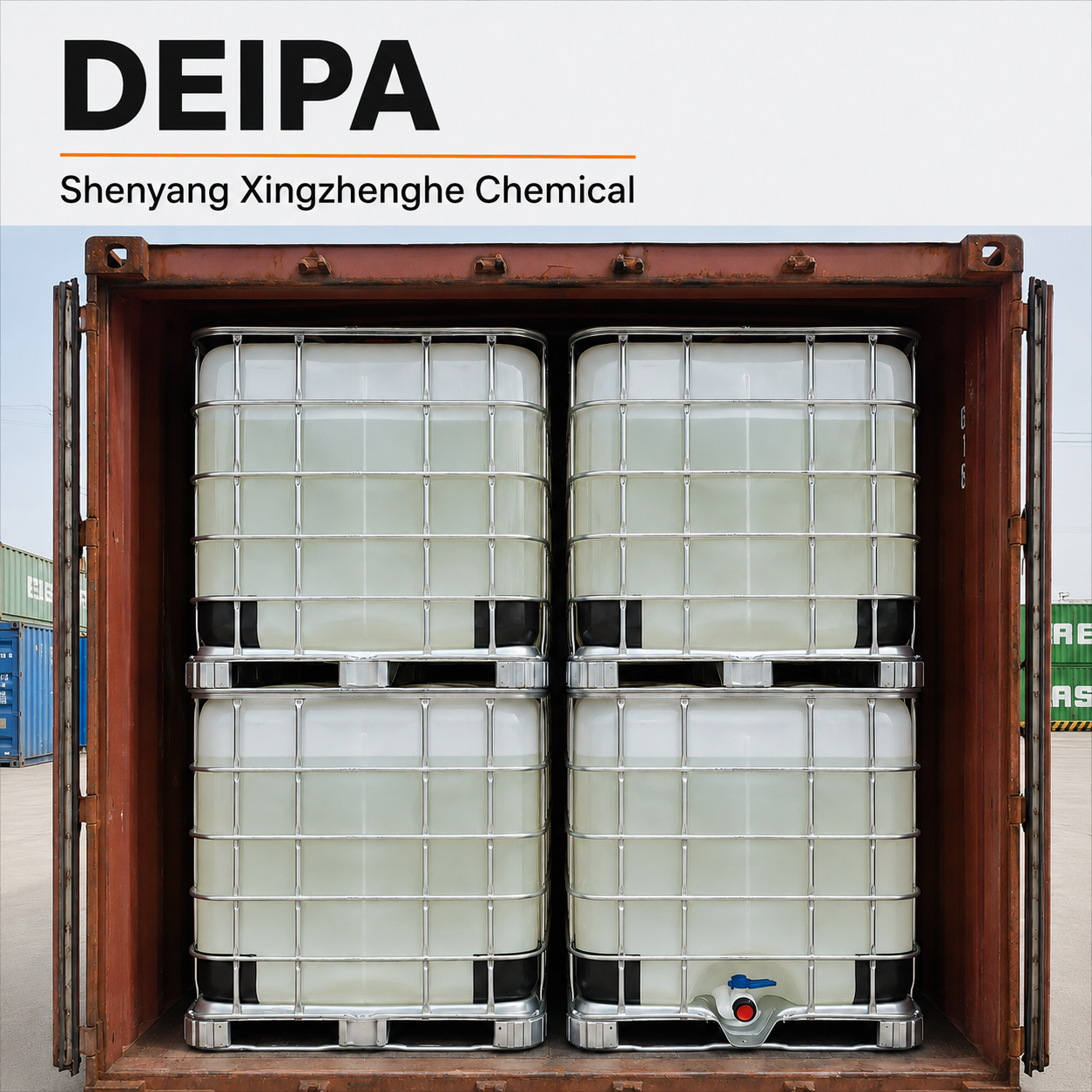
DEIPA stands for Diethanolisopropanolamine.
It is an alkanolamine containing both amine and hydroxyl functionalities.
DEIPA is used as a chemical raw material in several industrial applications and is also considered in certain cement grinding aid and cement additive formulations.
In cement-related applications, its actual performance depends on factors such as:
For this reason, DEIPA should be evaluated within the actual cement system rather than only according to its raw-material specification.
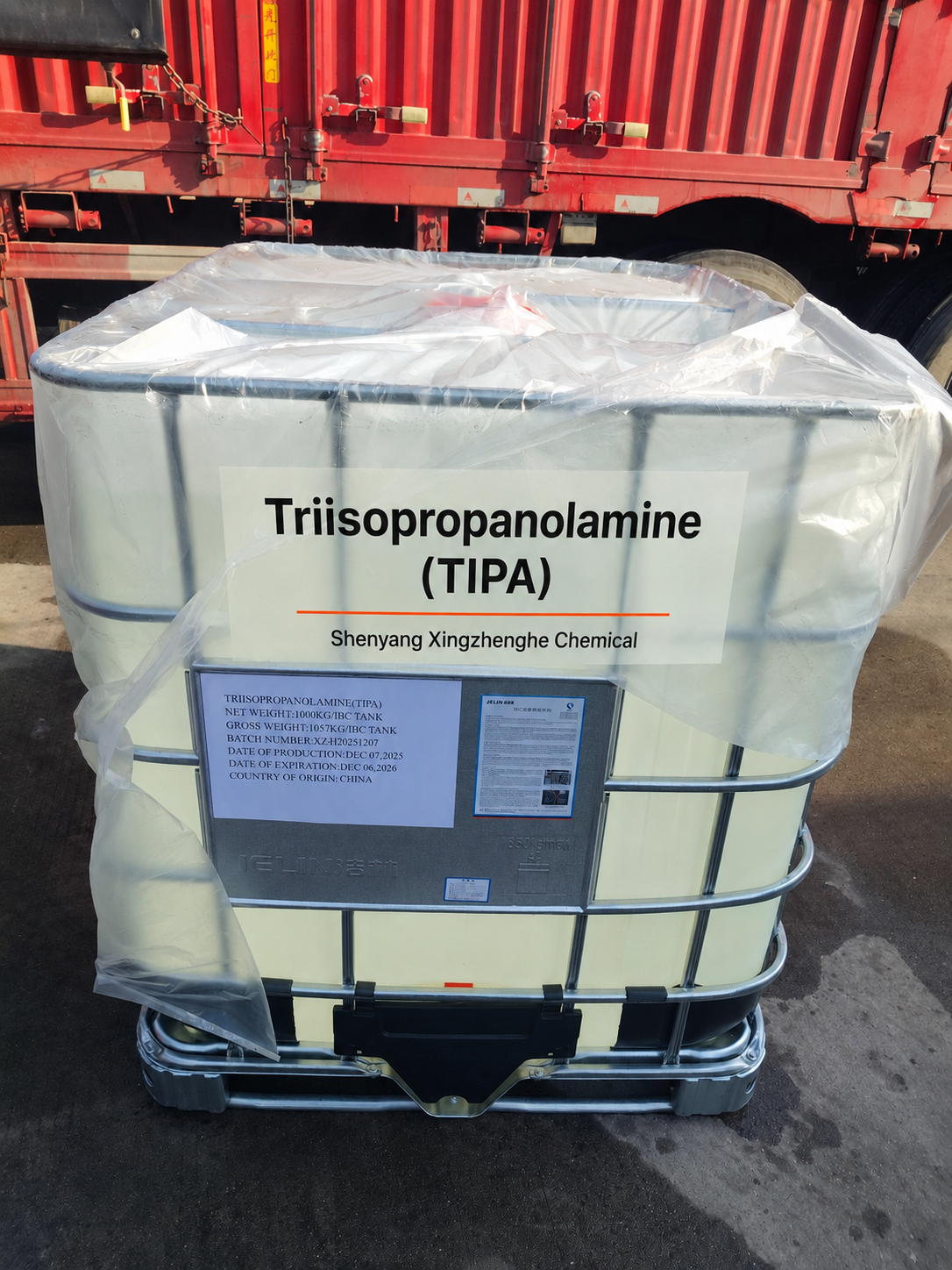
TIPA stands for Triisopropanolamine.
Like DEIPA, TIPA belongs to the alkanolamine family and contains an amine group together with hydroxyl functionality.
TIPA is used in various chemical formulations, including certain cement grinding aid systems.
Its behavior in cement is related not only to the grinding process but also to interactions within the cementitious system.
As with DEIPA, its actual effect cannot be determined from the product name alone.
No.
Although both belong to the alkanolamine family, DEIPA and TIPA have different molecular structures.
This structural difference can influence:
Therefore:
DEIPA and TIPA should not automatically be substituted at a 1:1 ratio without testing.
If a formulation currently uses TIPA and DEIPA is being evaluated as an alternative—or vice versa—a controlled comparison is preferable.
During cement manufacturing, clinker and other components are ground to produce cement with the required particle-size distribution and fineness.
During grinding, fine particles may interact and agglomerate.
A cement grinding aid is a formulation introduced during the grinding process to influence grinding behavior and, depending on its composition, other cement properties.
Commercial grinding aids may contain one or more components.
Common chemical families considered in formulation can include various:
Therefore, DEIPA or TIPA is usually better understood as a grinding-aid raw material or formulation component, rather than assuming that every commercial grinding aid consists of only one chemical.
DEIPA can be evaluated in cement grinding aid formulations where the formulator needs to consider both grinding behavior and cement performance.
Its actual effect depends on the cement system.
Depending on formulation and cement composition, DEIPA may influence characteristics associated with:
However, these effects should not be treated as fixed values.
For example, the same DEIPA dosage may produce different results when the clinker source changes.
TIPA is also used in certain cement grinding aid formulations.
Its interactions with cement phases can influence the behavior of the cementitious system.
When evaluating TIPA, formulators may consider:
Again, there is no universal performance value that applies to all cement plants.
The cement composition is an important variable.
From a formulation perspective, the important difference is that they are different alkanolamine molecules and therefore should not be expected to behave identically.
A practical comparison can be summarized as follows:
| Item | DEIPA | TIPA |
|---|---|---|
| Full Name | Diethanolisopropanolamine | Triisopropanolamine |
| Chemical Family | Alkanolamine | Alkanolamine |
| Cement Application | Grinding aid/additive formulations | Grinding aid/additive formulations |
| Main Evaluation | Grinding + cement performance | Grinding + cement performance |
| Fixed Universal Dosage | No | No |
| Direct 1:1 Replacement | Requires testing | Requires testing |
The appropriate choice depends on the target formulation.
This question requires careful interpretation.
Cement strength is not controlled by DEIPA alone.
It depends on:
DEIPA can be evaluated as part of a cement additive formulation where strength development is one of the measured parameters.
But it would be inaccurate to claim that a particular DEIPA dosage will always produce a fixed strength increase.
The result needs to be measured using the actual cement.
The same principle applies to TIPA.
TIPA is used in cement-related formulations and can influence cement hydration behavior under certain conditions.
However:
TIPA dosage does not correspond to one universal percentage increase in cement strength.
Different cement compositions respond differently.
This is why laboratory mortar tests are normally useful during formulation development.
When selecting a grinding-aid component, it is useful to define exactly what is meant by "strength."
For example:
are different performance targets.
A formulation optimized for one age may not necessarily provide the same relative behavior at another age.
Therefore, rather than labeling one material simply as an "early-strength chemical," it is better to compare actual strength-development curves in the intended cement.
Longer-age strength is also influenced by the complete cement system.
When 28-day performance is important, trials should consider:
Comparing DEIPA and TIPA using only one cement sample can provide useful formulation data, but the result should not automatically be generalized to all cement plants.
Clinker contains several mineral phases, commonly including:
The relative proportions of these phases influence cement hydration and strength development.
Alkanolamines can interact differently with components of the cementitious system.
Therefore, a grinding aid formulation that performs appropriately with one clinker may require adjustment when used with another.
This is one of the reasons why cement-specific testing is important.
Supplementary cementitious materials can change the behavior of a cement additive formulation.
For cement containing slag, the formulator may need to evaluate:
A DEIPA- or TIPA-containing formulation should therefore be tested with the actual slag cement rather than extrapolated only from Portland cement results.
Fly ash also changes the overall cementitious system.
Its:
can influence cement performance.
If the cement formulation contains significant fly ash, DEIPA/TIPA selection and dosage should be evaluated accordingly.
In formulation development, different alkanolamines can be evaluated individually or in combination.
A combination may be considered when the formulator is trying to balance several objectives.
However, simply mixing DEIPA and TIPA does not guarantee improved performance.
A blend should be tested for:
The ratio should be determined experimentally.
TEA (Triethanolamine) is another alkanolamine used in various industrial applications, including certain cement formulations.
DEIPA and TEA may be considered as components of a formulated grinding aid.
But because the compounds have different structures and cement interactions, their proportions need to be optimized according to the target cement.
Again, there is no universal mixing ratio suitable for every cement plant.
No.
TIPA is Triisopropanolamine, while TEA is Triethanolamine.
Both are alkanolamines, but their structures differ.
Therefore, their effects on grinding and cement hydration can also differ.
Replacing TEA with TIPA should be treated as a formulation change and verified experimentally.
There is no single DEIPA dosage appropriate for all cement grinding aid formulations.
The required amount depends on:
A practical approach is to conduct dosage-gradient testing.
The same applies to TIPA.
Rather than taking a dosage from another cement plant and applying it directly, formulators can establish several trial levels.
For example:
Control → Low dosage → Medium dosage → Higher dosage
while keeping other major variables stable.
The resulting cement can then be tested.
A useful trial should evaluate more than one property.
Depending on the cement plant and project, measurements may include:
The appropriate test program should follow the relevant cement standards and production requirements.
Two grinding aid raw materials may have similar appearance and specification values but behave differently in a cement system.
Laboratory testing provides a controlled way to compare them.
For example:
Base grinding aid without DEIPA/TIPA
Base formulation + DEIPA
Base formulation + TIPA
Base formulation + selected DEIPA/TIPA combination
Keeping other variables consistent makes the comparison more meaningful.
Laboratory testing can help screen candidate formulations, but an industrial cement mill introduces additional variables.
These include:
Therefore, a formulation that performs appropriately in laboratory tests should normally be verified under representative production conditions.
A practical selection process can follow these steps.
Determine whether the priority is:
Review:
Prepare DEIPA-, TIPA- or blended formulations.
Keep other variables as consistent as possible.
Evaluate grinding and cement/mortar properties.
Adjust the dosage according to test results.
Conduct mill trials before finalizing the formulation.
DEIPA stands for Diethanolisopropanolamine.
TIPA stands for Triisopropanolamine.
No. They are different alkanolamines with different molecular structures.
Both can be used as raw materials in certain cement grinding aid and cement additive formulations.
There is no universal answer. Selection depends on clinker composition, cement formulation, dosage and required performance.
Replacement should be verified through formulation and cement testing rather than assuming a direct 1:1 substitution.
They can be evaluated in blended formulations. The appropriate ratio depends on the cement and performance target.
No. Increasing dosage does not mean that all cement properties will continue improving. Dosage should be optimized experimentally.
DEIPA (Diethanolisopropanolamine) and TIPA (Triisopropanolamine) are both alkanolamines used as raw materials in certain cement grinding aid formulations, but they are not the same chemical and should not be treated as direct equivalents.
Their actual performance depends on:
clinker composition + cement type + supplementary materials + grinding conditions + formulation + dosage + target strength age.
Therefore, choosing between DEIPA and TIPA should not be based simply on which product is described as having a stronger effect.
A more useful approach is:
Define the cement performance target → analyze the clinker and cement composition → compare DEIPA and TIPA under controlled conditions → optimize dosage → evaluate strength development → verify the formulation in an industrial mill trial.
For cement grinding aid formulation, the appropriate alkanolamine is ultimately the one that matches the specific cement system and required performance profile.
Contact Us
Email:sales01@xzhch.com
Phone:+86 138-8985-0231/+86 138-9812-5732
WeChat:+86 138-8985-0231/+86 138-9812-5732
Whatsapp:+86 138-8985-0231/+86 138-9812-5732
Address:No. 33, Naner Road, Heping District, Shenyang, Liaoning, China
Copyright © 2002-2025 Powered by EyouCms 备案号:辽ICP备12007065号-1