
+86 138-8985-0231/+86 138-9812-5732

A full-scale cement mill trial requires production time, raw materials and coordination between laboratory and plant personnel. If a new grinding aid formulation is introduced directly into production without sufficient preliminary evaluation, it can be difficult to determine why the result differs from expectations.
The grinding aid itself is only one variable. Changes may also come from clinker composition, clinker grindability, gypsum, limestone, supplementary cementitious materials, mill temperature, separator settings, feed rate and target cement fineness.
For this reason, controlled laboratory testing can be used to screen different formulations before moving to a larger plant trial. The objective is not to reproduce every condition of an industrial cement mill, but to determine which formulations are worth taking to the next stage of evaluation.
When evaluating a new cement grinding aid, it is useful to establish a blank or reference sample first.
The blank should contain the same cement raw materials but without the grinding aid being evaluated.
A simple comparison can be arranged as follows:
The blank provides a reference point. Without a reference sample, it may be difficult to determine whether a measured change comes from the grinding aid or from normal variation in the cement system.
One of the important principles in comparative testing is to control the raw materials.
Suppose Formula A is tested with one clinker batch and Formula B is tested several days later with another clinker batch. If the results are different, the cause may be the grinding aid formulation, clinker variation or a combination of both.
For initial screening, try to keep the following materials consistent:
Their proportions should also remain unchanged unless the purpose of the experiment is specifically to investigate one of these variables.
Two clinker samples can have similar chemical analysis but behave differently during grinding.
Grinding behavior may be influenced by factors such as:
This is one reason why the same grinding aid formulation may produce different results with different clinker.
Before comparing several grinding aid formulations, it is useful to record the clinker source and batch. This information becomes particularly important when laboratory results are later compared with cement plant data.
Consider a trial where the laboratory simultaneously changes DEIPA dosage, TIPA dosage, gypsum content and grinding time.
If the final cement properties change, it becomes difficult to determine which variable caused the difference.
A more controlled approach is to change one major variable at a time.
Round 1: Keep the cement composition unchanged and compare different grinding aid formulations.
Round 2: Select one or two formulations and compare several dosage levels.
Round 3: Evaluate the selected formulation with another clinker or cement composition.
This approach creates a clearer dataset and makes subsequent formulation adjustment easier.
DEIPA and TIPA are used as formulation components in certain cement grinding aid systems.
However, comparing them only by equal mass dosage may not answer every formulation question.
The evaluation should also consider:
A basic test can include a blank, followed by DEIPA-based and TIPA-based formulations at controlled dosage levels.
There is no single dosage that can be assumed to be suitable for every cement system. The appropriate dosage should be determined according to the formulation, raw materials and test objective.
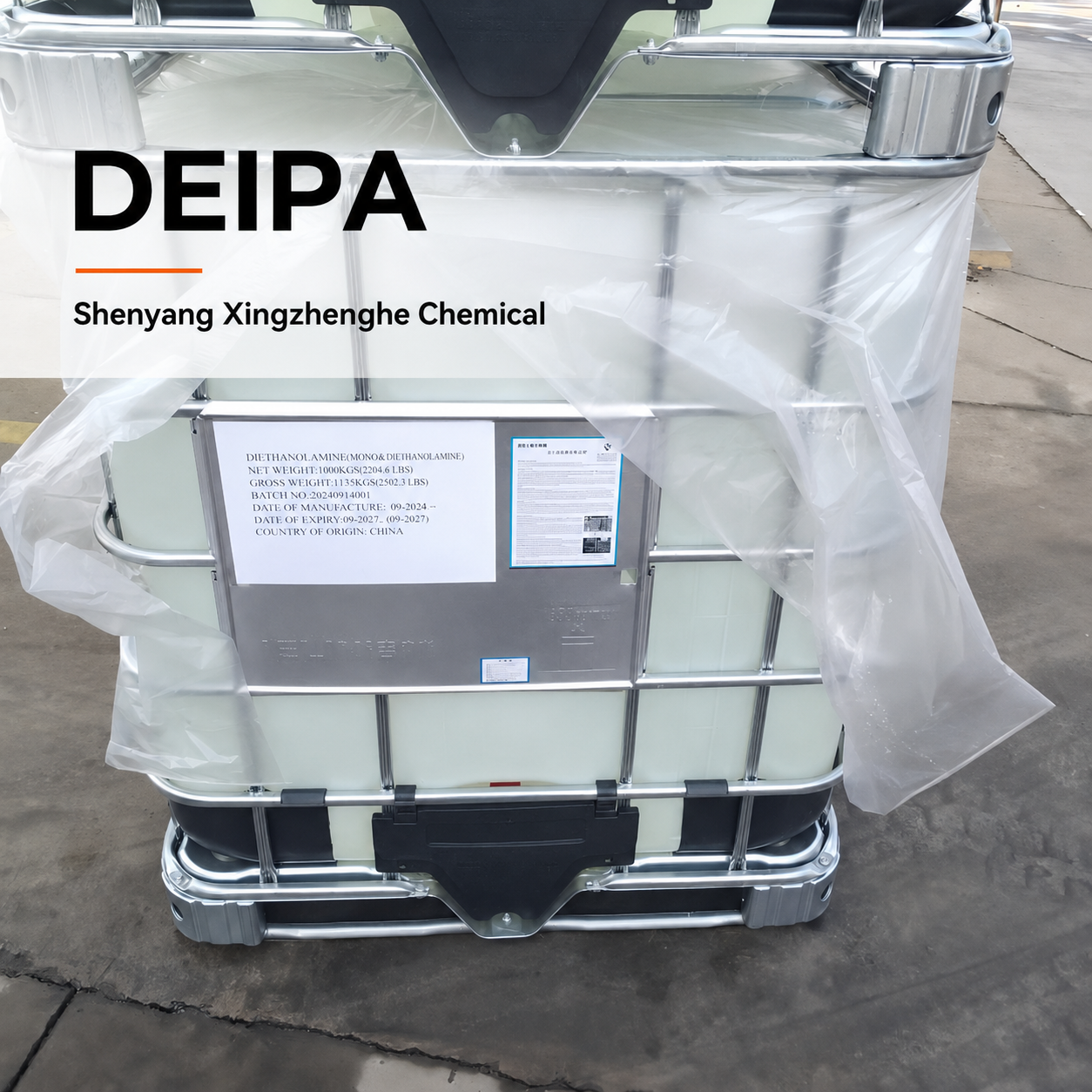
Commercial cement grinding aids are often formulated products rather than a single chemical. Therefore, two types of experiments can be useful.
DEIPA, TIPA or other individual components can be compared under controlled conditions.
This helps the formulator understand how individual raw materials behave in the selected cement system.
Complete grinding aid formulations can also be compared.
This approach is closer to actual industrial application because the performance of a finished grinding aid may depend on interactions among several formulation components.
These two experiments answer different questions and should not be treated as equivalent.
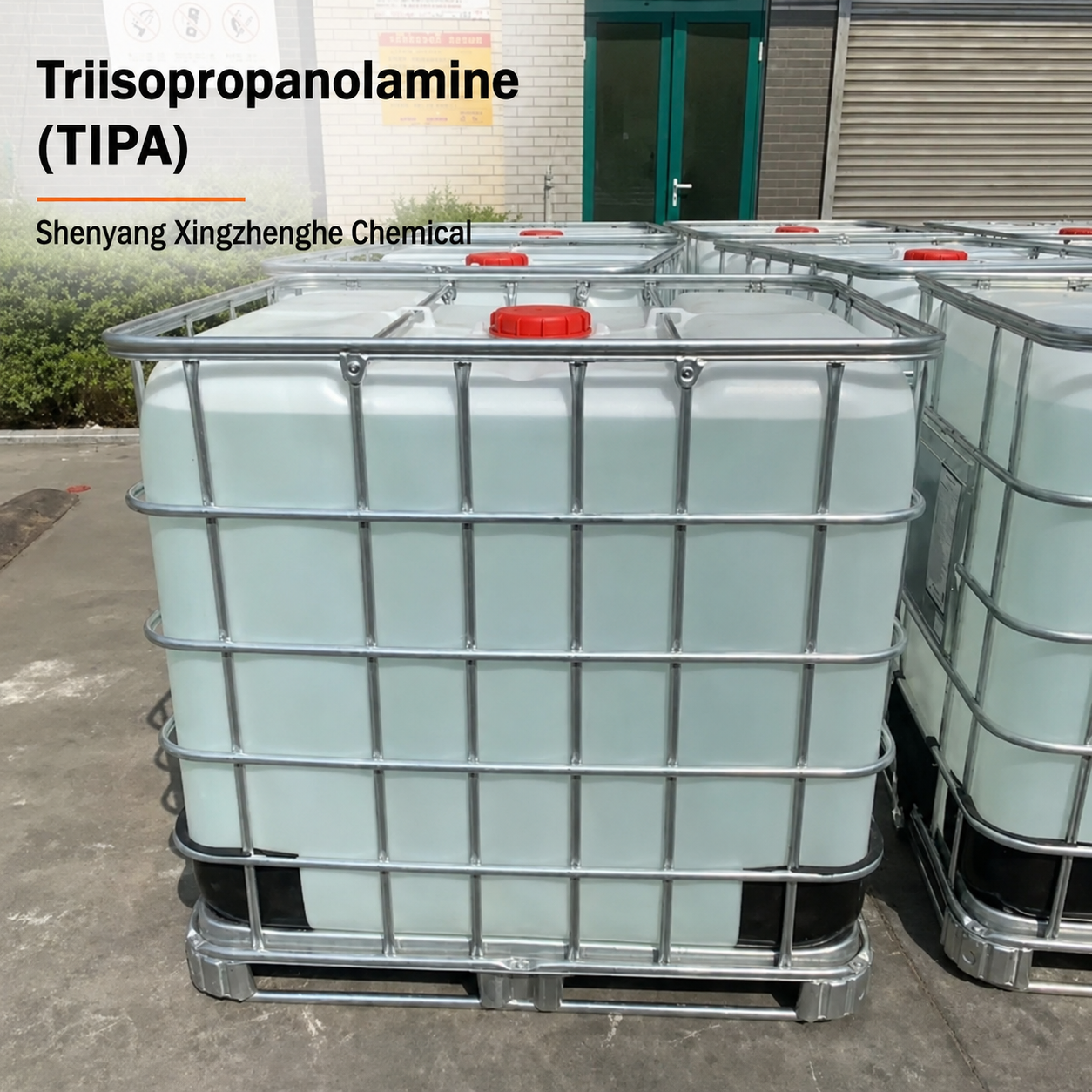
Looking at only one test result may provide an incomplete picture.
Depending on the purpose of the study, a laboratory may evaluate:
The required tests should be selected according to the actual purpose of the grinding aid formulation.
Grinding does not make every cement particle uniformly smaller. The final cement contains particles across a range of sizes.
A grinding aid may influence particle agglomeration, grinding behavior, powder flow and particle-size distribution.
Blaine fineness is commonly used as one indicator of cement fineness, but it does not describe the complete particle-size distribution.
Two cement samples may have similar Blaine values while their particle distributions are different. Where suitable equipment is available, particle-size analysis can therefore provide additional information when comparing grinding aid formulations.
A common evaluation mistake is to look only at cement fineness.
A higher Blaine value may be relevant, but it should not automatically be interpreted as evidence that one grinding aid is more suitable than another.
The cement plant may also need to consider:
The relevant indicators depend on the objective of the plant trial. A single laboratory number should not be considered in isolation.
When grinding aid formulations contain alkanolamines such as DEIPA or TIPA, cement producers may also evaluate mortar strength at different ages.
Depending on the applicable test method and project requirements, testing may include 1 day, 3 days, 7 days and 28 days, or another appropriate schedule.
A formulation may not influence every strength age in the same way.
For this reason, strength results should be interpreted together with cement composition, fineness and the applicable test conditions.
Grinding aid evaluation should not focus only on the grinding process.
Changes in cement fineness and formulation may also coincide with changes in other cement characteristics.
Depending on the project, it may be useful to monitor:
If a trial produces finer cement but also changes water demand, whether the result is suitable depends on the actual product requirements of the cement plant.
This is why grinding performance and cement quality should be evaluated together.
Testing only one grinding aid dosage provides limited information.
If the result does not meet expectations, the laboratory may not know whether the formulation is unsuitable, the dosage is too low or the dosage is too high.
A dosage gradient can provide more useful information:
Blank → Low Dosage → Medium Dosage → Higher Dosage
Other major test conditions should remain unchanged as far as practical.
The purpose is to observe how the cement system responds as the grinding aid dosage changes.
Increasing the grinding aid dosage also increases the amount of chemical used per ton of cement.
However, a higher dosage does not necessarily produce a proportional change in grinding or cement performance.
Depending on the formulation and cement system, dosage changes may also influence powder behavior, water demand, setting characteristics and mortar properties.
The objective should therefore not be to use the highest possible dosage.
A more appropriate objective is to identify a dosage range that meets the required technical and economic conditions. The appropriate level should be confirmed through testing.
Laboratory grinding equipment is different from an industrial cement mill. Laboratory testing should therefore not be interpreted as a complete simulation of plant conditions.
However, controlled laboratory grinding can still provide comparative information.
One possible approach is:
Same raw material → Same material mass → Same laboratory mill → Same grinding time → Different grinding aid formulation
The resulting cement samples can then be compared for fineness, sieve residue, particle-size distribution and other selected parameters.
Another approach is to grind toward a defined target and compare the conditions required to reach that target.
The appropriate method depends on the laboratory equipment and research objective.
Laboratory mills and industrial cement mills operate under different conditions.
An industrial grinding system introduces additional variables such as:
Therefore, laboratory screening should be regarded as a comparison and selection tool rather than a guarantee of plant performance.
Formulations that show suitable laboratory results should still be evaluated under representative plant conditions before a major commercial change is made.
Before introducing a new grinding aid, it is useful to record baseline operating conditions.
Depending on the mill, these may include:
After the baseline is recorded, the new formulation can be introduced while keeping unrelated operating variables as stable as practical.
Without baseline data, interpreting the final plant trial becomes more difficult.
A very short observation period may not represent stable operation.
Immediately after changing the grinding aid, circulating material inside the grinding system may still contain cement produced under the previous condition.
The appropriate stabilization period depends on the specific mill system.
Plant personnel should therefore distinguish between transition data and relatively stable operating data.
Comparisons should preferably be based on representative operating conditions rather than only the first measurements taken after a formulation change.
Suppose a grinding aid trial changes the mill feed rate or production output.
That result may be relevant to the plant. However, the resulting cement still needs to meet the plant's required quality parameters.
Likewise, a formulation that changes certain cement properties but negatively affects production conditions may require further evaluation.
A practical plant trial therefore considers:
Mill Operation + Cement Quality
This provides a more complete basis for formulation decisions.
If a cement grinding aid manufacturer is changing its DEIPA or TIPA supplier, a controlled comparison is useful.
A practical evaluation sequence can be:
During the first comparison, it is useful to keep the original formulation and other raw materials unchanged as far as practical.
If differences appear, formulation adjustment can then be investigated systematically.
For cement grinding aid applications, buyers can provide:
For supplier replacement projects, providing the specification of the currently used material may also help with sample comparison.
Laboratory testing can help screen and compare formulations under controlled conditions, but it cannot reproduce every variable of an industrial cement mill. Appropriate plant verification is therefore recommended before a major formulation change.
Equal-dosage testing can be one useful comparison. However, active content, complete formulation composition, cement characteristics and the purpose of the test should also be considered.
No. Blaine is one useful cement parameter, but particle-size distribution, cement quality, production conditions and the plant's actual objectives should also be considered.
There is no universal number. A blank sample combined with several controlled dosage levels generally provides more information than testing only one addition rate.
If strength development is relevant to the formulation objective, cement or mortar strength at appropriate ages can be included according to the applicable test method.
Clinker mineralogy, grindability, gypsum, supplementary materials and mill operating conditions can influence grinding aid performance. For this reason, a formulation should be evaluated with the actual cement raw materials and production conditions.
Shenyang Xingzhenghe Chemical Co., Ltd. supplies DEIPA, TIPA and other isopropanolamine products for applicable industrial formulations, including cement grinding aid production.
Product specifications, batch documentation, packaging information and samples can be provided according to purchasing requirements.
For new grinding aid formulations or supplier replacement projects, controlled laboratory comparison followed by appropriate plant verification is recommended.
Actual application results may vary according to clinker characteristics, cement composition, grinding aid formulation, dosage and production conditions.
Contact Us
Email:sales01@xzhch.com
Phone:+86 138-8985-0231/+86 138-9812-5732
WeChat:+86 138-8985-0231/+86 138-9812-5732
Whatsapp:+86 138-8985-0231/+86 138-9812-5732
Address:No. 33, Naner Road, Heping District, Shenyang, Liaoning, China
Copyright © 2002-2025 Powered by EyouCms 备案号:辽ICP备12007065号-1