
+86 138-8985-0231/+86 138-9812-5732

MIPA and DIPA may be evaluated in formulations where an alkanolamine reacts with a fatty acid. A common challenge is estimating the starting amine amount and then confirming that the finished blend has the required pH and behavior.
The calculation begins with the acid value of the fatty-acid material. It provides a theoretical estimate of the amount of base needed to neutralize the measured acidity. The actual formulation still needs testing because raw-material composition, purity, water content, other acidic ingredients and the required product properties can all affect the result.
This article explains how to estimate amine demand and plan a controlled laboratory evaluation for MIPA or DIPA.
A fatty acid contains a carboxylic acid group. MIPA and DIPA each contain one basic amine nitrogen, which can accept a proton from an acid. Neutralization produces an amine carboxylate salt.
This acid-base reaction should be distinguished from amide formation. Neutralizing a fatty acid with MIPA or DIPA does not, by itself, mean that the product is a fatty-acid alkanolamide. Amide synthesis is a different reaction process with different conditions and product verification requirements.
Keeping these reactions separate helps formulators describe the intended product accurately and select suitable process controls.
Acid value expresses the amount of potassium hydroxide, in milligrams, required to neutralize the acidic components in one gram of a sample. It can be used to estimate the acid equivalents in a known mass of fatty-acid material.
A higher acid value indicates more measured acidity per unit mass. If two fatty-acid raw materials have different acid values, the same mass of each may require different amounts of amine for neutralization.
Use the acid value from the actual raw-material specification or test result where available. A generic value should not replace batch-specific data when calculating a formulation.
MIPA and DIPA each have one basic amine site per molecule, but their molecular weights differ. The theoretical mass required for the same number of acid equivalents will therefore differ.
| Material | Amine type | Molecular weight | Basic amine sites per molecule |
|---|---|---|---|
| MIPA | Primary alkanolamine | 75.11 g/mol | 1 |
| DIPA | Secondary alkanolamine | 133.19 g/mol | 1 |
This table provides a calculation basis only. It does not imply that MIPA and DIPA will produce identical solubility, viscosity, foaming or application performance at an equivalent neutralization level.
For a fatty-acid sample with a known acid value, calculate the measured acid equivalents first:
Acid equivalents (mol) = Acid value (mg KOH/g) × Fatty-acid mass (g) ÷ 56,100
Then estimate the pure amine amount:
Theoretical amine mass (g) = Acid equivalents (mol) × Amine molecular weight (g/mol)
If the amine is supplied at less than 100% purity, adjust for its assay:
Amine mass to weigh (g) = Theoretical pure amine mass (g) ÷ Purity fraction
For example, consider 100 g of fatty-acid material with an acid value of 200 mg KOH/g:
This is a stoichiometric starting estimate. It is not a recommended commercial dosage or a guaranteed endpoint. The final amount should be established through a controlled trial using the actual raw materials and product requirements.
The estimate is most useful when the measured acidity comes mainly from the fatty-acid component and the amine’s assay is known. A formulation may also contain other acidic ingredients, water, salts or components that affect the titration and pH.
Check the following before relying on the calculated amount:
If the complete formula contains several acidic ingredients, testing only the fatty-acid acid value may underestimate the total neutralization demand. Use an appropriate formulation-level test to evaluate the finished system.
Neutralization can release heat, and local high concentrations may create uneven mixing. During laboratory development, control the addition sequence, mixing and temperature consistently.
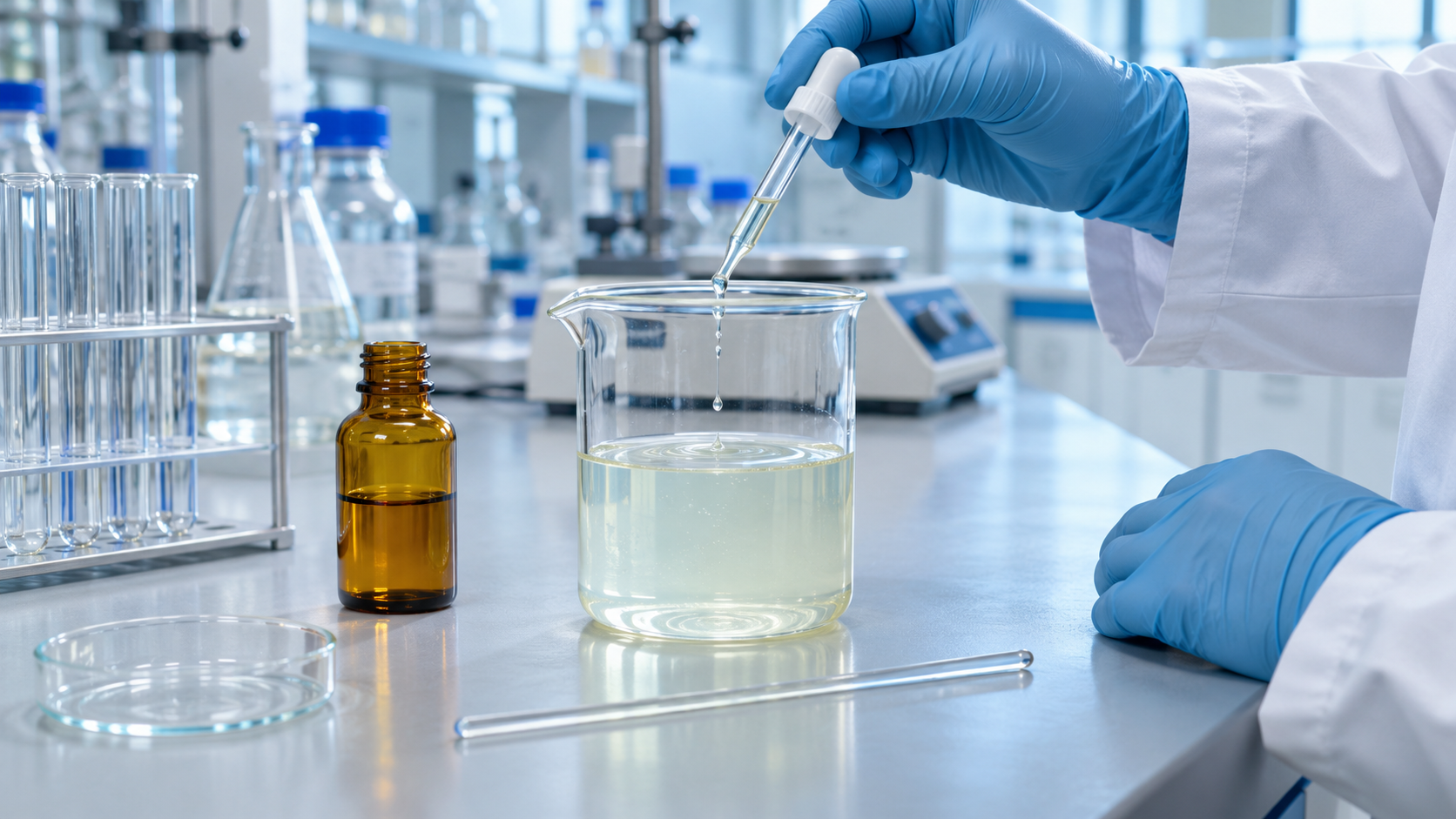
A practical trial can proceed as follows:
The order of addition and mixing time should be chosen for the actual formulation and equipment. Do not treat a small beaker trial as a direct scale-up procedure without reviewing heat removal, mixing efficiency and handling requirements.
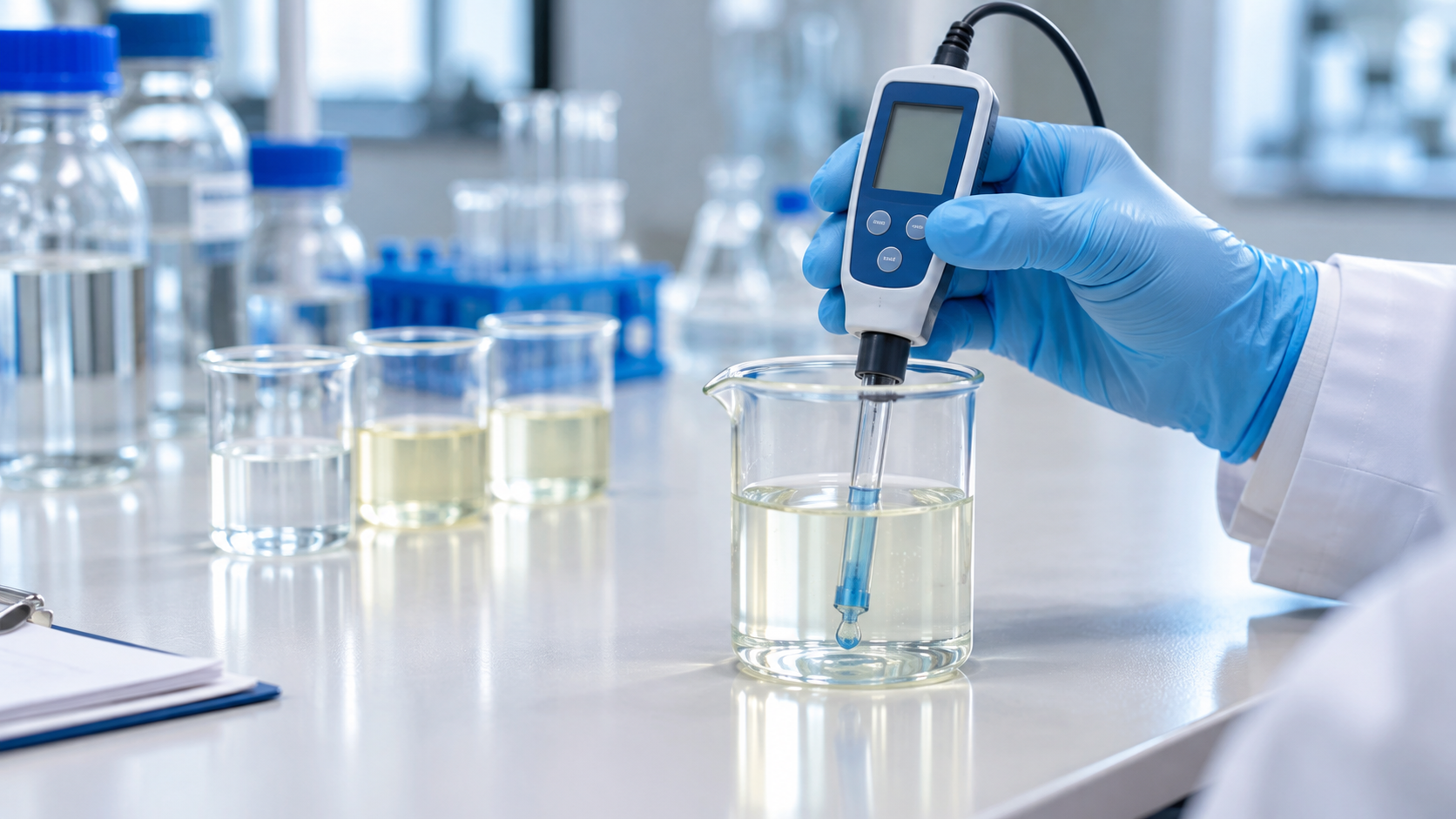
pH can help monitor a neutralization trial, but it should be measured in a consistent way. The result may change with sample dilution, temperature, water quality and other ingredients.
For meaningful comparisons:
A pH value alone does not show whether the product meets its intended application requirements. Also observe appearance, solubility, phase uniformity and any performance criteria relevant to the finished formulation.
A theoretical neutralization calculation helps compare starting amounts, but it does not predict every finished-product property. MIPA and DIPA differ in molecular weight and structure, so equivalent calculations should be followed by application testing.
Depending on the formulation, compare:
Keep the fatty-acid raw material, process conditions and evaluation method consistent. This makes it easier to determine whether observed differences are associated with the amine choice or with another variable.
Their molecular weights differ, so equal masses do not supply equal molar amounts. Calculate from acid equivalents and adjust for the actual assay.
The calculation provides a starting point. The final formulation depends on the complete raw-material system and product requirements.
pH should be interpreted with appearance, solubility, stability and application performance. The measurement method also needs to remain consistent.
An amine carboxylate salt and a fatty-acid alkanolamide are different products. Do not identify a neutralized blend as an amide without confirming the reaction and product composition.
If the fatty-acid grade, amine amount, water and mixing conditions all change at once, the result is difficult to interpret. Change one major variable at a time.
It can provide a theoretical estimate of neutralization demand when the acid value and sample mass are known. The calculation should be adjusted for amine purity and confirmed with formulation testing.
No. MIPA and DIPA have different molecular weights. The required mass differs for the same theoretical number of acid equivalents.
No. Acid-base neutralization produces an amine carboxylate salt. Amide formation is a separate reaction and requires its own process conditions and product verification.
Not by itself. pH is one measurement. Formulators should also check the finished blend’s appearance, uniformity and application-specific performance using consistent test conditions.
Acid value offers a practical starting point for estimating the theoretical amount of MIPA or DIPA needed to neutralize a fatty-acid raw material. Because the two amines have different molecular weights, calculate their amounts from acid equivalents and adjust for the actual product assay.
The estimate should then be checked in the complete formulation. Consistent addition, mixing, temperature and pH measurement help produce trials that can be compared. Final selection should be based on the finished product’s required properties and test results.
Contact Us
Email:sales01@xzhch.com
Phone:+86 138-8985-0231/+86 138-9812-5732
WeChat:+86 138-8985-0231/+86 138-9812-5732
Whatsapp:+86 138-8985-0231/+86 138-9812-5732
Address:No. 33, Naner Road, Heping District, Shenyang, Liaoning, China
Copyright © 2002-2025 Powered by EyouCms 备案号:辽ICP备12007065号-1