
+86 138-8985-0231/+86 138-9812-5732

Water-based metalworking fluids combine several functional components, including lubricity additives, emulsifiers, corrosion-control ingredients and pH-adjusting materials. When a formulation contains both an alkanolamine and a nonionic surfactant, each material should be evaluated within the complete system.
Monoisopropanolamine (MIPA) and AEO-9 serve different formulation roles. MIPA may be used in metalworking fluid formulations for pH contribution and other performance functions, while AEO-9 is a nonionic surfactant that formulators may assess for wetting or emulsification. Their suitability depends on the base fluid, other additives, dilution water and intended metal substrates.
A compatibility check between two raw materials is a useful first step, but it cannot predict the performance of a finished metalworking fluid. The concentrate may look uniform while the diluted fluid separates, foams excessively or performs differently on a particular metal.
MIPA should not be treated as a replacement for a complete corrosion-inhibitor package. Likewise, adding AEO-9 does not by itself establish that an oil phase will remain stable under operating conditions. Test the ingredients in the formulation and at the dilution conditions relevant to the intended use.
Before preparing samples, document the variables that may affect the results:
Keep the test method consistent across samples. Changing several ingredients at once makes it harder to identify what caused a difference.
A practical laboratory screen can compare a control formulation with a limited set of modified samples. For example, hold the base formula constant and vary the presence or level of MIPA and AEO-9 separately. If the formulation includes oil, keep the oil-to-water ratio consistent.
Record the order of addition, mixing time, temperature and appearance after mixing. Observe the concentrate first, then prepare each sample at the intended dilution. Check for separation, sediment, haze or changes in flow after a defined standing period.
This approach helps distinguish raw-material compatibility from dilution stability. It also gives formulators a clearer basis for deciding which samples deserve further testing.
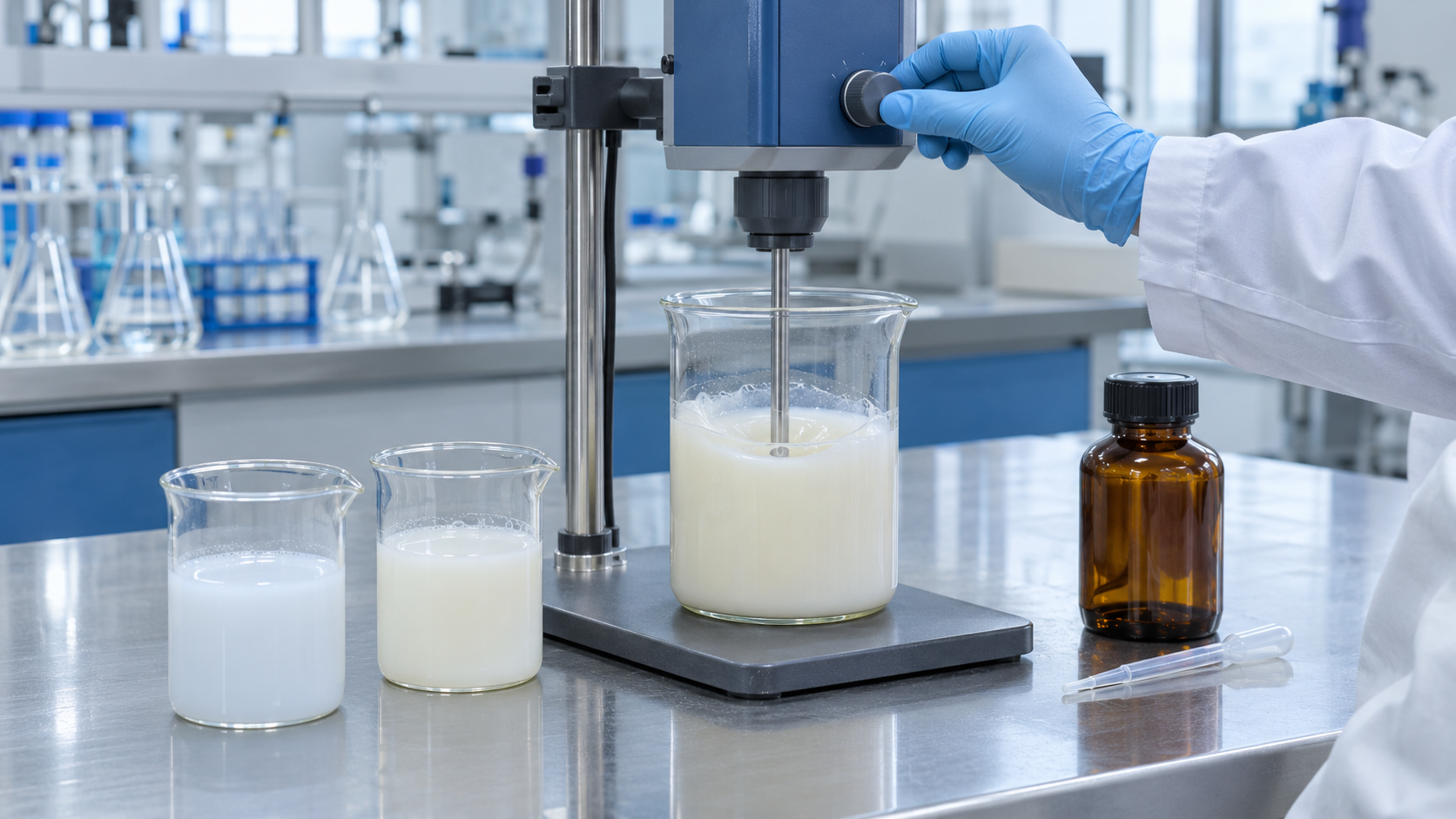
Dilute each sample using the water conditions relevant to the application. Hardness and other water characteristics can affect the appearance and stability of water-based fluids, so use representative water where possible.
During dilution, note whether the fluid mixes uniformly and whether it forms persistent foam. Foam behavior should be assessed with a repeatable method, since agitation intensity and vessel shape can influence observations. A sample that appears acceptable in a jar test may behave differently in circulation or spray equipment.
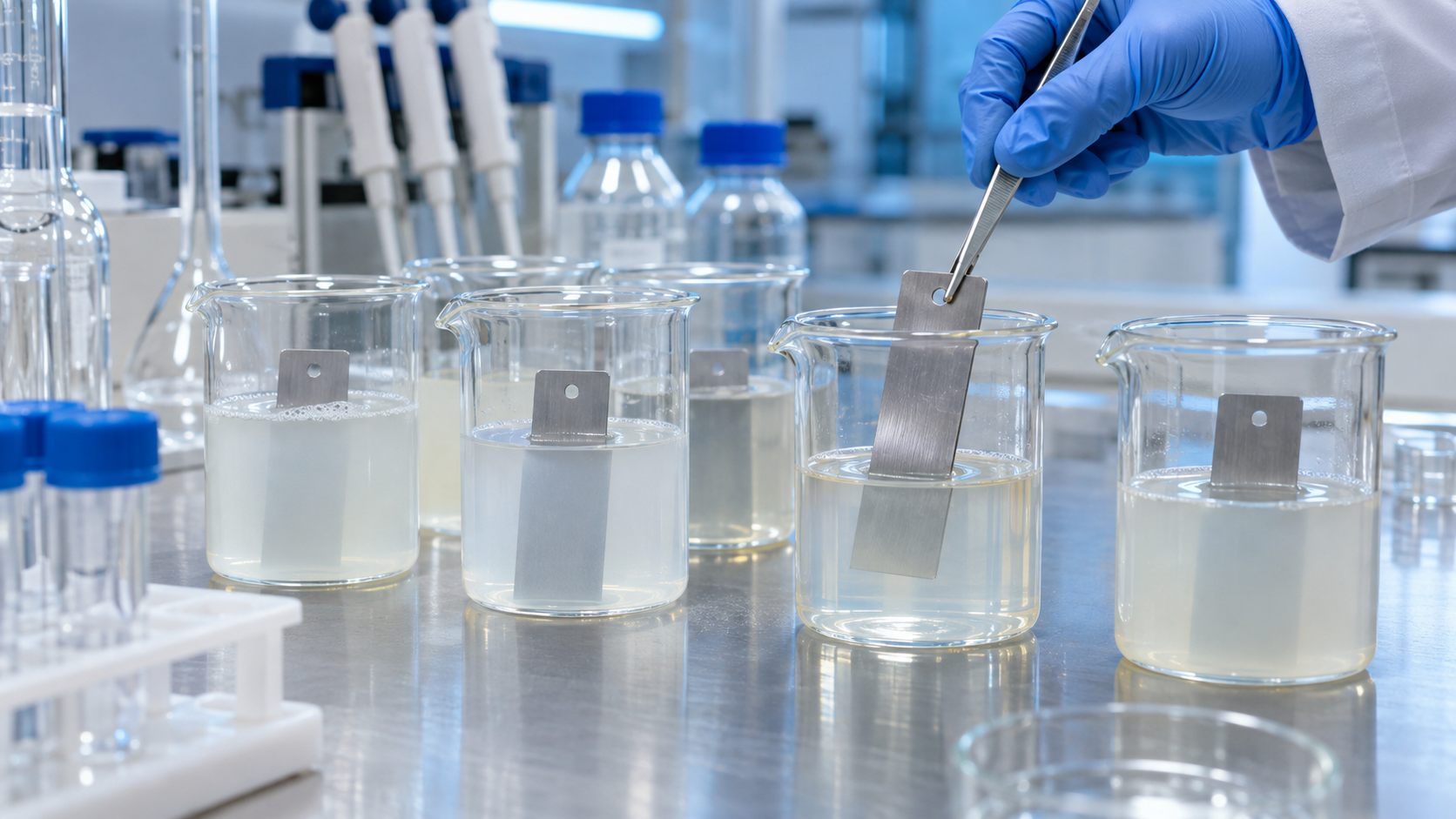
Corrosion performance depends on the full formulation, concentration, water quality, metal type and exposure conditions. Use an appropriate laboratory procedure for the intended application and compare modified samples with a control.
Where multiple substrates are involved, test them separately. A result on one metal should not be assumed to predict behavior on another. Record visible staining, rust, deposits and any change in the fluid after the test.
A useful screening record can include:
| Evaluation item | What to record |
|---|---|
| Concentrate appearance | Uniformity, separation, haze or sediment |
| Dilution behavior | Ease of mixing and appearance after dilution |
| Foam | Initial foam and persistence under the chosen method |
| Corrosion screen | Results by metal type and test condition |
| Storage observation | Changes after a defined standing period |
No single observation confirms suitability. Compare the results against the technical requirements of the intended process, and conduct application testing before making a production decision.
Use the supplier's current technical documents and safety data sheets when selecting grades and planning laboratory work. Confirm that the selected ingredients are suitable for the intended regulatory and end-use requirements. Amines and other additives should be reviewed as part of the overall formulation, including applicable restrictions related to nitrosating agents.
MIPA and AEO-9 can be considered as separate formulation inputs in water-based metalworking fluid development. A controlled test matrix helps determine whether their use is compatible with the chosen emulsifier package, dilution water and metal substrates. The final decision should come from complete-formulation testing rather than a raw-material comparison alone.
Contact Us
Email:sales01@xzhch.com
Phone:+86 138-8985-0231/+86 138-9812-5732
WeChat:+86 138-8985-0231/+86 138-9812-5732
Whatsapp:+86 138-8985-0231/+86 138-9812-5732
Address:No. 33, Naner Road, Heping District, Shenyang, Liaoning, China
Copyright © 2002-2025 Powered by EyouCms 备案号:辽ICP备12007065号-1